Elevated corsica food experiences in luxury hotels
Corsica food in luxury hotels balances Mediterranean lightness with mountain depth. On this rugged French island, high end properties such as Hôtel & Spa des Pêcheurs in Cavallo or Hôtel Misincu in Cap Corse curate menus where every Corsican ingredient reflects altitude, terroir, and sea breeze. Guests quickly sense that Corsica France hospitality treats the table as a stage for identity.
Many five star addresses between Ajaccio Corse and Cap Corse now build tasting journeys around traditional Corsican recipes. At Hôtel Les Mouettes in Ajaccio or La Villa Calvi in Balagne, chefs reinterpret each traditional dish with precise techniques, yet they keep the soul of Corsican cuisine through slow cooked meat, aromatic herbs, and generous olive oil. This approach lets travellers compare classic village plates with refined hotel versions of the same cuisine during a single stay.
In Ajaccio Corsica, waterfront hotels often highlight seafood while mountain retreats such as the Grand Hôtel de Cala Rossa or Domaine de Murtoli focus on wild boar, sheep goat cheeses, and chestnut flour pastries. The best properties source from free range farms and small producers, ensuring every local product reaches the table at peak ripeness. For many guests, this careful sourcing defines Corsica best luxury hospitality more than marble lobbies or infinity pools.
From room to restaurant: how premium stays frame corsican cuisine
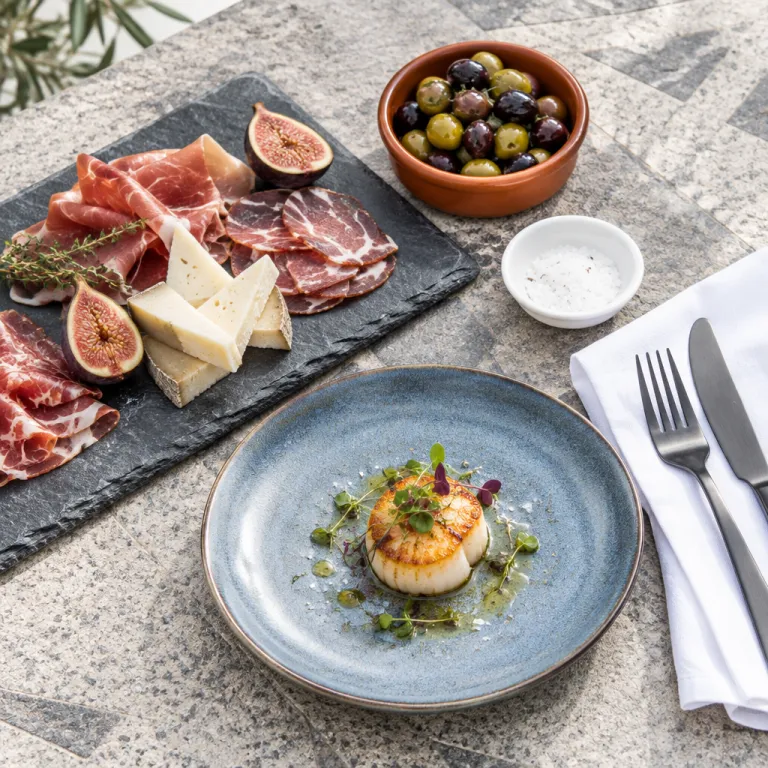
High end hotels across Corsica France now design stays where Corsican gastronomy shapes the entire itinerary. A welcome drink might feature chilled island wine with a small plate of aged cheese and cured meat from free range herds. Later, a private tasting menu explores traditional Corsican flavours course by course, pairing each dish with different wines from the island.
In refined properties near Ajaccio Corse, chefs often start with brocciu beignets, then move to wild boar stew enriched with chestnut flour and local olive oil. At La Signoria near Calvi, for example, the chef might describe the stew as “a memory of mountain villages served on fine porcelain,” a phrase often used in local press to evoke the contrast between rustic flavours and elegant service. Dessert may showcase chestnut cakes, citrus from Cap Corse, and a drizzle of Corsican honey that captures the maquis shrubs in every spoonful. Guests who choose elegant hotels in Corsica France for a refined Mediterranean escape gain direct access to these carefully staged culinary traditions.
Some luxury suites include in room tastings where a sommelier presents several Corsican wines alongside sheep goat cheeses and charcuterie. At Casadelmar in Porto Vecchio, one guest described a private tasting as “like travelling across the island without leaving the terrace” in a hotel review. This intimate format helps travellers understand how water, altitude, and chestnut trees shape the character of each valley. When Corsica food is framed this way, the hotel becomes both a sanctuary and a classroom for regional cuisine.
Wine, water, and terroir: pairing corsican wine with hotel gastronomy
Any serious exploration of Corsica food in luxury settings must include Corsican wine. According to the Comité Interprofessionnel des Vins de Corse (CIVC), the island offers nine main appellations, and many premium hotels now collaborate with estates from Cap Corse to Ajaccio Corsica for bespoke tastings. Guests can study how granite, schist, and limestone soils influence both red wines and whites served with seafood or meat.
Coastal properties often organise excursions to vineyards, then return guests to the hotel for a pairing dinner that mirrors what they tasted among the vines. A structured menu might open with stuffed brocciu in delicate pastry, matched with a mineral white wine from northern Corse Corsican hills such as a Vermentinu from Patrimonio. Later courses could feature boar stew or grilled free range lamb, paired with structured reds highlighted in a guide to Corsica’s nine wine appellations published by the CIVC.
Water service also reflects terroir, with many hotels offering still and sparkling options sourced from springs across Corsica France, including Orezza or Zilia. Sommeliers explain how the same mountains that feed chestnut trees and olive groves also shape the island’s purest water. When Corsica food, Corsican wines, and local water are presented together, travellers experience a complete portrait of the island’s geology on the palate.
Corsican ingredients reimagined: from chestnut flour to stuffed brocciu
Luxury hotel kitchens treat iconic Corsica food ingredients as building blocks for contemporary plates. Chestnut and chestnut flour, once survival staples in every mountain village, now appear in refined cakes, gnocchi, and savoury crêpes. Chefs respect the century old techniques while adjusting textures and seasoning for modern tastes.
Brocciu, the fresh cheese made from sheep goat or goat milk whey, becomes a star ingredient in both sweet and savoury courses. A traditional Corsican stuffed brocciu cannelloni might be lightened with herbs and olive oil, then finished with a foam rather than a heavy sauce. In parallel, desserts reinterpret the same cheese with Corsican honey, citrus zest, and a delicate wheat flour biscuit.
Wild boar remains central to Corsican cuisine, yet boar stew in luxury hotels often arrives in smaller portions with precise plating. Instead of rustic bowls, guests may receive slow braised meat on chestnut flour polenta, surrounded by wild herbs and an olive reduction. As several chefs working in Corsica have noted in interviews, the challenge is to keep the wild soul of the product while giving it urban elegance. This balance between rustic roots and polished presentation defines Corsica best gastronomic addresses on the island.
Design led stays where architecture meets corsica food
Some travellers choose architect designed villas and design focused hotels specifically to deepen their Corsica food journey. These properties often integrate open kitchens, panoramic dining rooms, and terraces that frame both sea and chestnut trees. The setting reinforces how closely Corsican cuisine is tied to landscape and light.
On the west coast of Corsica France, several villas employ private chefs who build menus around daily market finds and seasonal wild herbs. Guests might enjoy a lunch of grilled meat with olive oil and garden vegetables, followed by cheese and Corsican honey while the sun sets over the island’s granite cliffs. For travellers seeking where contemporary style meets the maquis, architect designed villas in Corsica offer a seamless link between design and gastronomy.
These stays often include tailored experiences such as foraging walks, visits to free range farms, or private tastings of Corsican wine on the terrace. Hosts explain how traditional Corsican recipes evolved from scarcity to celebration, especially in remote parts of Corse Corsican mountains. When architecture, service, and cuisine align, Corsica food becomes the narrative thread that ties the entire stay together.
Planning a luxury stay around corsica food and culinary traditions
Planning a high end trip around Corsica food requires attention to both geography and seasonality. The island stretches from Cap Corse in the north to Ajaccio Corse and beyond, with each area offering distinct culinary traditions. Travellers who map their route around markets, vineyards, and coastal restaurants gain a richer sense of Corsican identity.
When choosing hotels in Corsica France, consider how closely each property works with local producers and free range farms. Ask whether the chef uses chestnut flour from nearby mills, olive oil from family groves, and goat milk cheeses from small dairies. Properties that highlight traditional Corsican recipes and modern interpretations of Corsican cuisine usually provide the most memorable meals.
For many guests, the Corsica best itinerary combines a few nights in Ajaccio Corsica, time in Cap Corse wine country, and a stay in the interior near ancient chestnut trees. This mix allows you to taste seafood, wild boar, and refined cheese courses in different settings across the island. By aligning reservations with regional strengths, Corsica food becomes the guiding compass for every stage of your journey.
Key figures shaping luxury corsica food tourism
- Regional tourism bodies report that Corsica welcomes several million visitors annually, and a significant share of high end travellers cite cuisine and wine as primary motivations for choosing the island.
- Data shared by the Comité Interprofessionnel des Vins de Corse indicates that a large proportion of Corsican wine production now carries an appellation label, supporting premium pairing menus in luxury hotels.
- Regional agricultural statistics show that chestnut groves once covered tens of thousands of hectares in Corse, and renewed planting programmes are helping reintroduce chestnut flour into contemporary gastronomy.
- Surveys by the Agence du Tourisme de la Corse highlight that travellers who participate in at least one culinary experience, such as a wine tasting or cooking class, report higher overall satisfaction with their stay.
FAQ about corsica food in luxury and premium stays
What makes corsica food unique in luxury hotels compared with mainland France ?
Corsica food in luxury hotels stands out because chefs work with a compact yet diverse terroir that combines mountain, forest, and sea within short distances. This allows menus to feature wild boar, chestnut flour dishes, and ultra fresh seafood on the same table. The strong identity of Corsican cuisine gives high end properties a distinctive flavour profile that differs from mainland resorts.
Which areas of Corsica France are best for wine focused stays ?
Travellers interested in Corsican wine should look at Cap Corse, Patrimonio, and the regions around Ajaccio Corse and Sartène. These appellations offer structured reds, aromatic whites, and rosés that pair well with both meat and seafood. Many luxury hotels in these zones collaborate directly with estates to organise tastings and vineyard visits.
Can luxury hotels accommodate dietary restrictions while showcasing traditional corsican dishes ?
Most premium properties on the island can adapt Corsica food to vegetarian, gluten free, or lighter preferences without losing authenticity. Chefs may replace meat with seasonal vegetables, use wheat flour alternatives, or highlight brocciu and goat milk cheeses. Communicating your needs before arrival helps the team design menus that respect both health and traditional Corsican flavours.
Is it possible to experience local producers directly from a high end hotel base ?
Many luxury hotels and villas in Corsica France now offer curated excursions to free range farms, olive groves, and chestnut trees in nearby valleys. Guests can meet producers of Corsican honey, cheese, and olive oil, then taste those products back at the property. This approach deepens understanding of Corsica food while maintaining the comfort of a premium base.
How far in advance should I book a gastronomy focused stay on the island ?
For peak months, it is wise to reserve luxury hotels and key restaurant tables several months ahead. Properties that specialise in Corsican cuisine and wine pairings often have limited capacity, especially for chef’s table experiences. Early planning ensures access to the Corsica best culinary programmes and avoids compromising on location or room category.