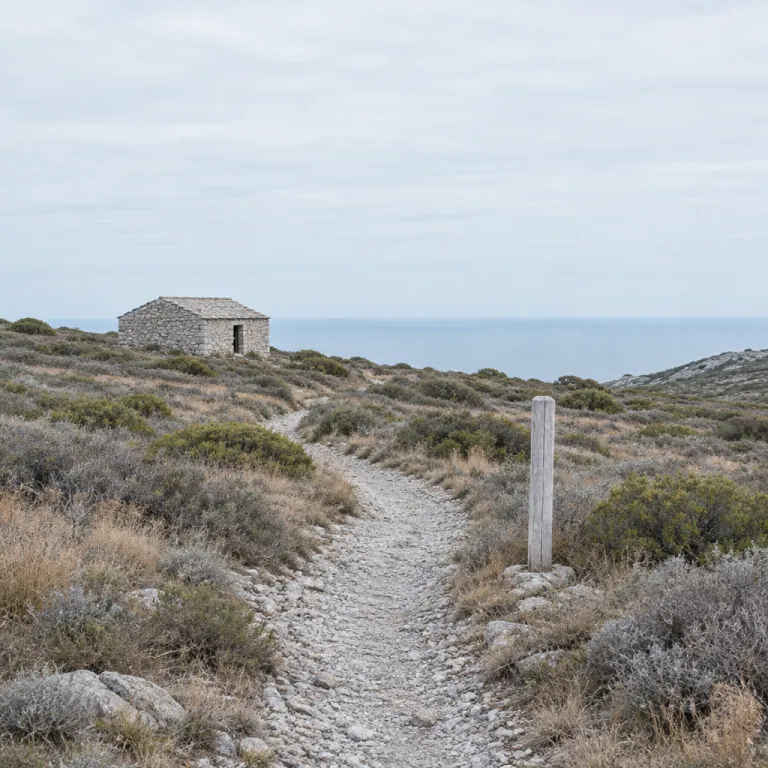
Why the Mare a Mare trails suit autumn luxury walking
The Corsica Mare a Mare routes in the autumn hiking season suit travelers who want quiet paths and characterful inns. Compared with the GR20, each cross-island itinerary offers a more moderate level of effort, with walking that still feels wild yet remains accessible to fit guests who prefer a good bed and a serious dinner. You trade exposed ridgelines for forest paths, sea-to-mountain panoramas and a slower experience that lets you share real time with Corsican hosts.
The three classic itineraries — Mare a Mare Nord, Mare a Mare Centre and Mare a Mare Sud — all cross Corsica from sea to sea, yet each trail has its own personality. The northern route links the Balagne and the centre near Corte, while the southern options weave through Sud Corsica villages and chestnut woods above the gulf near Propriano. For luxury walkers, these hiking routes are less about endurance and more about navigation between small hotels, auberges and converted bergeries where the welcome feels as important as the walking.
Autumn brings cooler Corsica days, softer light and turning leaves in the beech and chestnut forests that frame much of the Mare a Mare Nord and Mare a Mare Sud. The air feels good underfoot and on the skin, and the paths are quieter after the peak season, which makes the overall level of effort feel better balanced with comfort. For a solo explorer, this is the moment when a multi-day crossing becomes about listening to the maquis, watching the sea appear and vanish, and arriving each evening at a glass of Patrimonio or Ajaccio rosé rather than a crowded refuge dormitory.
Mare a Mare Nord and Centre: crossing Corsica’s interior in style
The Mare a Mare Nord is the connoisseur’s alternative to the GR20, linking the island’s north and interior with a sequence of villages where time still moves slowly. Typical stages range from 10 to 18 km per day, with 500–900 m of ascent and 4–7 hours of walking, depending on your pace and how often you stop in cafés or viewpoints. You walk between stone hamlets, cross rivers on old bridges and spend nights in small hotels where the owner might share a glass of myrtle liqueur while explaining the next day’s trail. For many guests, this autumn itinerary offers a good compromise between moderate hiking and genuine immersion in the island’s culture.
Starting near the sea in the Balagne and finishing closer to the eastern coast, the northern itinerary passes within reach of Corte, the historic university town that anchors the island’s interior. From here, some walkers add extra days to explore nearby Mare e Monti stages or to enjoy more relaxed walking on accessible paths above the gorges. If you are travelling with older teenagers who enjoy adventure, the mix of waymarked trails, history and independent navigation pairs well with the kind of active itineraries described in this guide to Corsica with teenagers and phone-free adventures.
The Mare a Mare Centre, sometimes overlooked, runs between the two coasts through agricultural heartlands and forested ridges, offering a different level of intimacy with rural Corsica. Autumn colours here can be particularly good, with chestnut groves turning gold and the air cool enough for long days without heat stress. Daily distances are similar to the northern route, but the gradients can feel gentler, which suits guests who prefer steady effort over steep climbs. Luxury minded walkers often book properties with pools still warm from summer, creating an experience where a day on the trail ends with a quiet swim, a refined dinner and the sense that you have crossed a private version of the island rather than its most famous high route.
Mare a Mare Sud: Alta Rocca villages, sea views and slow luxury
The Mare a Mare Sud, sometimes called the mare south route, is where autumn walking becomes a study in contrasts between sea and mountain. You move between the Gulf of Propriano and the Porto-Vecchio area, threading through the Alta Rocca plateau where granite villages cling to ridges above deep valleys. The level of difficulty remains moderate for most fit walkers, with typical stages of 12–17 km and 500–800 m of ascent, yet the sense of space and the quality of light in autumn feel quietly dramatic.
Names like Sainte-Lucie-de-Tallano, often written as Santa Lucia or Lucia Tallano, and Serra-di-Scopamène, sometimes shortened to Serra Scopamena or Levie Serra, appear on waymarks and maps as you progress along the southern trail. Around Sainte-Lucie-de-Tallano and the nearby hameau of Tallano Burgo, olive groves and chestnut woods frame stone houses that now host discreet guest rooms with thick walls and polished concrete bathrooms. Higher up, near Cartalavonu and Levie — sometimes combined as Cartalavonu Levie in hiking notes — the paths open to views that stretch towards the sea near Porto-Vecchio and the distant outline of Sardinia.
Luxury walkers often base themselves for several Corsica days in or around Alta Rocca, using transfers to sample the most scenic sections of the Mare a Mare Sud without carrying full packs. A simple three- or four-day sampler might link Sainte-Lucie-de-Tallano, Serra-di-Scopamène, Levie and Cartalavonu, with a final transfer down to the coast for a night by the sea. This approach suits solo travelers who value a good mattress and refined cuisine as much as the hiking itself, and who prefer curated stages over a strict coast-to-coast itinerary. Between stages, some guests now pair their walking with time in wild thermal pools and refined spa stays, using resources such as this guide to natural hot springs in Corsica to plan restorative soaks after long days on the trail.
Where to sleep well: from sea gateways to inland character stays
For autumn journeys on the Mare a Mare, the choice of where you sleep shapes the entire experience. On the western side, Propriano and the surrounding gulf act as a natural gateway, with refined hotels overlooking the sea that work well for a first or last night before or after the southern route. To the east, Porto-Vecchio and the nearby beaches provide a softer landing, with properties that balance discreet luxury and easy access to the trailheads above Alta Rocca.
Further north, walkers on the Mare a Mare Nord or the central routes often arrive or depart via Corte, which combines academic energy with a strong sense of Corsican identity. From here, it is possible to arrange transfers to quieter villages or to link sections of Mare e Monti and Mare a Mare Nord for a more varied set of hiking trails. On the eastern coast, Moriani-Plage — often written as Moriani Plage — offers sea-level relaxation after days in the interior, with long sandy beaches that feel particularly peaceful once the main holiday crowds have gone.
Many of the most atmospheric stays lie not on the coast but in villages such as Sainte-Lucie-de-Tallano, Serra-di-Scopamène and Levie, where former family houses now host a handful of rooms. In these places, the luxury is not the beach club but the bergerie where the shepherd slices lonzu while the sun sets on the maquis, and where the owner might share stories of mare sea crossings or of ancestors who walked these paths long before they were waymarked. For travelers who enjoy narrative-rich itineraries, it can be rewarding to pair a Mare a Mare stay with historically themed journeys such as those outlined in this guide to following Napoleon in Corsica with refined stays, creating a broader sense of the island beyond its beaches.
Planning your autumn Mare a Mare: navigation, logistics and safety
Planning a Mare a Mare crossing in the shoulder season requires more than simply booking charming rooms and hoping for good weather. Autumn brings cooler temperatures and quieter paths, but also shorter days and the first serious rains, which can affect river crossings and make some sections slippery. A realistic assessment of your hiking level, combined with flexible stage planning, helps ensure that the experience remains pleasurable rather than punishing.
Waymarking on the northern, southern and central routes is generally clear, yet navigation still demands attention, especially in forested sections or where paths cross rocky slabs. Carrying a recent topographic map and a fully charged GPS app is wise, even on apparently accessible stages, because fog and low cloud can arrive quickly in the interior. A simple visual aid, such as a printed overview map showing the three coast-to-coast lines and main access towns (Propriano, Porto-Vecchio, Corte and Moriani-Plage), helps you picture how the routes relate to each other. Before setting out, contact local tourist offices or your chosen accommodations to check that gîtes, auberges and small hotels along your intended trail are open for the dates you plan, as some close once the main summer season ends.
Solo travelers should also think about how they will share their daily plans with someone off the trail, especially on quieter sections between inland villages and the sea. Transfers between points such as Propriano, Porto-Vecchio, Moriani-Plage and Corte can be arranged through local drivers, allowing you to tailor the number of days you actually spend walking while still feeling that you have crossed Corsica. When you balance ambition and comfort in this way, the Mare a Mare becomes less a test of endurance and more a curated journey through the island’s interior, where each evening’s welcome feels like a reward for the day’s effort.
Seeing the island differently: what the Mare a Mare reveals
Walking any of the Mare a Mare routes in autumn changes how you understand Corsica. Instead of a linear beach holiday, you experience a sequence of landscapes that move from sea-level maquis to chestnut forests, then back down to the shore, with each day offering a new angle on the island’s character. The rhythm of these coast-to-coast trails encourages you to slow down, to notice the scent of cistus after rain and the way village life contracts around the café and the church once the crowds have gone.
On the northern itinerary, you might start near the Balagne coast and end closer to the eastern plains, crossing old transhumance routes that once linked summer and winter pastures. The southern and mare south variants, by contrast, reveal Sud Corsica as a patchwork of granite ridges, river pools and terraced hillsides, with villages like Sainte-Lucie-de-Tallano, Serra-di-Scopamène and Levie acting as cultural anchors. Along the way, you meet artisans who still cure charcuterie in stone cellars, olive growers who talk about harvest days and innkeepers who share family recipes that taste better after hours on the trail.
Even short sections — a few Corsica days linking inland hamlets before returning to the coast near Propriano, Porto-Vecchio or Moriani-Plage — can reframe your sense of what a luxury stay on the island can be. Instead of measuring value only in thread count or spa menus, you begin to weigh the quality of a place by the silence at night, the clarity of the stars and the ease with which you can step from your door onto old stone paths. For many guests, that is the lasting gift of these moderate yet quietly demanding routes: a feeling that you have walked through the real Corsica, not just looked at it from a lounger.
FAQ
How difficult are the Mare a Mare trails compared with the GR20 ?
The Mare a Mare Nord, Centre and Sud are generally considered moderate rather than extreme, especially when compared with the GR20’s exposed ridges and steep scrambles. Expect several hours of walking per day on uneven mountain paths, with regular ascents and descents but few technical sections that require hands-on scrambling. You still need to be comfortable with 500–900 m of daily elevation gain, yet there are more opportunities to sleep in comfortable small hotels or auberges. For many travelers, this balance of effort and comfort makes the Mare a Mare routes better suited to a relaxed yet active holiday.
Is autumn a good time for walking the Mare a Mare routes ?
Autumn is often one of the best seasons for these cross-island trails, thanks to cooler temperatures, fewer crowds and beautiful colours in the chestnut and beech forests. The sea can remain warm enough for swimming at the start and end of your trip, especially near Propriano, Porto-Vecchio or Moriani-Plage. The main caveat is that days are shorter and some accommodations may close outside peak season, so careful planning, checking local weather forecasts and advance confirmation of each night’s stay are essential.
Where should I base myself for a more luxurious Mare a Mare experience ?
For a comfort-focused trip, many travelers choose coastal bases such as Propriano, Porto-Vecchio or Moriani-Plage and then arrange transfers to walk selected stages inland. Others prefer to stay in characterful village houses in Alta Rocca, around Sainte-Lucie-de-Tallano, Serra-di-Scopamène or Levie, where the atmosphere feels more intimate and evenings are quieter. In all cases, booking properties with good heating, generous breakfasts, luggage transfer options and flexible dinner times makes autumn walking more enjoyable.
Do I need a guide for the Mare a Mare, or can I walk independently ?
The Mare a Mare routes are generally well waymarked, and many experienced hikers walk them independently using maps and GPS apps for navigation. A guide can still add value by handling logistics, sharing local history and adjusting the route to your fitness level and interests. Solo travelers who are new to Corsica or to mountain walking may feel more relaxed with at least a few guided days before continuing alone, especially on longer stages or in more remote forested sections.
How many days should I plan for a Mare a Mare themed trip ?
The full Mare a Mare Nord, Centre or Sud crossings each require several days of continuous walking, often around a week depending on your chosen pace and rest days. Many luxury travelers prefer to sample only the most scenic sections, combining two or three inland nights with time on the coast. A week allows time for four or five hiking days plus rest and spa time by the sea, while ten days give you space to combine different routes or add cultural visits in Corte or the Alta Rocca villages. Whatever the duration, building in at least one non-walking day helps your body recover and lets you enjoy your accommodations fully.