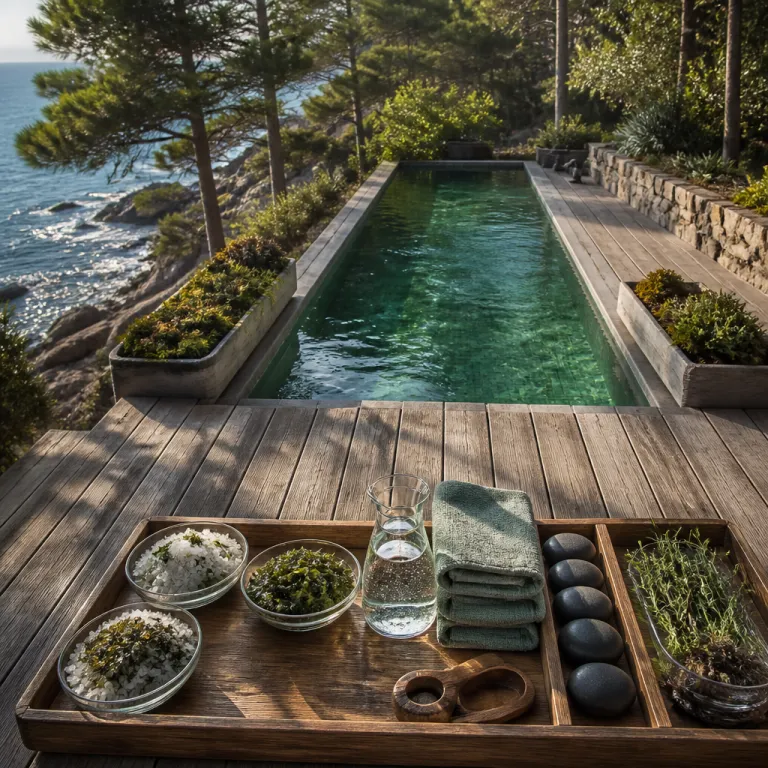
Thalassotherapy in Corsica: how to recognise the real thing
Thalassotherapy in Corsica begins with one non negotiable element ; the sea itself. Authentic thalassotherapy Corsica spa seawater treatment always uses fresh seawater drawn close to shore, then filtered and heated to around 33 to 35 °C for optimal absorption. A hotel may offer a stylish spa, a panoramic pool and a long massage menu, yet still fall short of true thalasso standards.
In a genuine thalasso spa, you move through structured spa treatments that combine hydrotherapy jets, algae wraps and pressurised seawater showers. These treatments work on the whole body, using the mineral rich water to ease joints, support circulation and calm the nervous system. The difference between a simple sea spa and medical grade thalassotherapy lies in protocols supervised by qualified teams, calibrated treatment rooms and a seawater circuit designed as a therapeutic journey rather than a decorative feature.
France pioneered thalassotherapy, from the Atlantic hubs of Biarritz and the Côte d’Émeraude to Mediterranean enclaves like Corsica. Names such as Miramar Thalassa, Biarrtiz Miramar and Sofitel Biarritz helped define the model ; Corsican properties now adapt that savoir faire to a wilder island setting. When you find a spa hotel in Corsica that speaks of thalassa sea rituals, heated seawater pools and structured cures rather than vague wellness, you are usually closer to the real tradition.
One practical test is the presence of dedicated thalassotherapy pools with different depths, temperatures and hydrojets. A proper seawater pool for therapy is not just a warm basin with a view, but a tool for targeted work on the spine, legs and shoulders. Look for a clear treatment list mentioning hydrotherapy, algae based body wraps, medical consultations and minimum stay packages, not only à la carte massage choice or a quick min facial between meetings.
Riva Bella and Corsica’s leading seawater retreats
On the eastern coast near Aléria, Riva Bella Thalasso & Spa is the reference point for thalassotherapy Corsica spa seawater treatment. Set between lagoon and sea, Riva Bella uses seawater hydrotherapy and marine based treatments in a calm, low rise setting that feels closer to nature than to a city resort. The centre works year round, with seawater pools and spa facilities operating in all seasons, though specific hours vary with the period.
Riva Bella’s thalasso spa focuses on a structured seawater circuit that alternates jets, bubble beds and counter current corridors. Guests move from a heated seawater pool to focused hydrotherapy cabins, then to algae wraps or targeted massage sessions for the back, legs or full body. The aim is not only relaxation, but also to address stress, sleep issues and musculoskeletal tension accumulated during long haul flights or intense business schedules.
Riva Bella Thalasso & Spa is recognised for combining traditional thalassotherapy with modern techniques, supported by local wellness experts. The centre’s philosophy is summed up in a simple definition ; “What is thalassotherapy? A therapy using seawater and marine products for health benefits.” That clarity matters when you compare offers from a generic spa hotel that markets a sea view pool as a thalasso experience without any structured seawater circuit or medical framing.
Across Corsica, a handful of luxury hotels now integrate elements of thalasso spa culture into broader wellness programs. Some Ajaccio thalassa inspired properties, for example, pair compact thalassotherapy pools with high end treatment rooms and refined Mediterranean dining. For a curated overview of the island’s most accomplished sea facing spa hotels, the guide to Corsica’s finest spa hotels and indulgent escapes by the sea is a useful starting point before you refine your own massage choice and length of stay.
The science behind seawater: why thalasso still matters
Thalassotherapy is built on the idea that the human body shares mineral similarities with seawater. When you immerse yourself in heated seawater at around body temperature, the skin’s permeability increases and trace elements such as magnesium and potassium are more easily absorbed. This is why authentic thalassotherapy Corsica spa seawater treatment insists on controlled temperatures, not just any warm pool.
Clinical research from French and European centres has long explored how hydrotherapy and marine based treatments influence circulation, joint mobility and stress markers. Historically, the French social security system even reimbursed prescribed thalasso cures for conditions such as rheumatism, post pregnancy recovery and chronic back pain. That medical heritage explains why serious thalasso spa facilities still use structured protocols, medical questionnaires and minimum stay durations rather than only offering a quick min massage before dinner.
Negative ion concentration in seawater is often cited as one factor behind the sense of deep relaxation after a sea spa session. At Riva Bella, internal measurements highlight “Negative ion concentration in seawater 100 %” as a reminder of the marine environment’s intensity. While figures like this need context from independent research, they align with broader findings that coastal environments support lower stress levels compared with urban interiors.
For business leisure travellers, the practical benefits are tangible ; reduced jet lag symptoms, looser shoulders after long meetings and better sleep quality. A three day immersion in heated seawater pools, alternating with targeted massage and min facial care, can reset the nervous system more effectively than a simple hotel gym routine. To deepen the effect, some guests combine thalasso sessions with quieter practices such as sound baths or thermal spring visits, as outlined in the island’s guide to Corsica’s quiet wellness revolution.
How a thalasso cure works: from three day reset to seven day program
When you book a thalassotherapy Corsica spa seawater treatment, you usually choose between a short three day reset or a more intensive seven day cure. A three day program suits executives extending a work trip, offering enough time for the body to adapt without overhauling your schedule. A seven day stay, by contrast, allows deeper work on chronic tension, sleep patterns and metabolic balance.
A typical day in a serious thalasso spa begins with a medical or wellness consultation, followed by two to four hydrotherapy sessions in the morning. You might start with a supervised seawater circuit in a heated seawater pool, then move to an affusion shower, an algae wrap and a targeted massage choice tailored to your back or legs. Afternoons are often lighter, with min facial care, relaxation in thalassotherapy pools and optional fitness or stretching classes facing the sea.
Cost varies with the level of hotel comfort, the number of treatment rooms and the complexity of the program. In Corsica, expect a three day package in a quality spa hotel to sit in the mid to upper range of Mediterranean wellness pricing, reflecting both the island logistics and the expertise required to maintain seawater pools. Seven day cures naturally cost more, but the per day rate often decreases, making longer stays attractive for those seeking measurable results.
When comparing offers, look beyond headline prices and check what is included per day in minutes ; some programs detail each min massage, each circuit min in the pool and the number of hydrotherapy sessions. A transparent schedule helps you find the right balance between structured care and free time to enjoy the beach, the maquis or a gastronomic evening at places like La Table de Mina, profiled in the feature on Porto Vecchio’s gastronomic spring. The most satisfying stays weave together sea based treatments, refined dining and unhurried evenings on your terrace.
Luxury, service and setting: choosing the right Corsican spa hotel
Not every traveller wants a clinical environment, even when seeking serious thalassotherapy in Corsica. The island now offers a spectrum of spa hotel options, from discreet coastal retreats with only a few pools to larger resorts with extensive seawater circuits. The key is to align the level of medical structure you need with the style of stay you enjoy.
On the east coast, Riva Bella leans towards nature and calm, with low buildings, direct sea access and a focus on marine based treatments. Some properties near Ajaccio thalassa style the experience differently, pairing compact thalasso spa facilities with high end suites, fine dining and concierge teams used to business travellers. In both cases, you should expect heated seawater pools, clear information about the source and renewal of the water, and treatment rooms designed for privacy and acoustic comfort.
Service standards matter as much as the technical side of thalassotherapy Corsica spa seawater treatment. Executives arriving late from Paris or Milan need flexible check in, efficient pre arrival questionnaires and the option to compress or extend sessions without losing therapeutic coherence. When you review offers, pay attention to how the hotel describes its spa treatments, whether it mentions structured thalasso protocols or only generic massages, and how many minutes are allocated to each min massage or min facial.
Details such as the number of pools, the presence of a dedicated seawater pool for active walking and the availability of quiet relaxation lounges make a real difference. A property that understands thalassa sea culture will also offer healthy Mediterranean menus, light enough to complement hydrotherapy yet satisfying after a day in the water. The most compelling addresses in Corsica manage to feel both medically credible and sensorially rich, with the sea always present through views, breezes and the scent of salt on your skin.
Seasonality, microclimates and combining thalasso with island life
Corsica’s thalassotherapy scene operates year round, but the feel of a stay shifts with the seasons. Spring and autumn are ideal for focused thalasso spa programs, with mild air temperatures, quieter beaches and more availability in treatment rooms. Summer brings warmer sea water and longer evenings, better suited to combining lighter spa treatments with sailing, hiking or family time.
Winter on the island has its own appeal for business leisure travellers who value privacy and calm. Heated seawater pools and indoor seawater circuits come into their own when the sea outside is rougher and the maquis carries the scent of woodsmoke. Rates in many spa hotel properties are softer, and you can often negotiate a choice min of extra sessions or late check outs to fit around remote work.
Microclimates also matter when you plan a thalassotherapy Corsica spa seawater treatment. The east coast around Aléria and Riva Bella tends to be slightly warmer and more sheltered, which suits early season stays focused on hydrotherapy and long walks on the sand. The Ajaccio thalassa area on the west coast offers more dramatic sunsets and a livelier restaurant scene, appealing if you want to balance structured cures with evenings in town.
Whichever region you choose, build in time outside the spa to let the body integrate the effects of the water. Gentle swims in the sea, short hikes through the maquis and unhurried lunches of grilled fish and garden vegetables all reinforce the work done in thalassotherapy pools. In the end, the most effective cures are those that treat the whole person, not only the muscles and joints, and Corsica’s blend of sea, mountains and measured pace is a powerful ally.
How Corsica compares to Atlantic thalasso hubs
Travellers familiar with Atlantic thalasso hubs such as Biarritz often ask how Corsica measures up. On the French Atlantic coast, large centres like Sofitel Biarritz Le Miramar Thalassa sea & Spa, sometimes referred to as Biarritz Miramar or Miramar Thalassa, offer extensive facilities and long medical traditions. Corsica, by contrast, delivers a more intimate scale, with fewer but carefully curated centres such as Riva Bella and selected Ajaccio thalassa inspired hotels.
From a technical standpoint, both regions rely on the same principles ; heated seawater, structured hydrotherapy and marine based body treatments. The mineral composition of Atlantic water differs slightly from the Mediterranean, yet the core benefits for circulation, joint mobility and stress reduction remain comparable. What changes most is the atmosphere around your thalassotherapy Corsica spa seawater treatment, from the light on the sea to the flavours on your plate after a day in the pools.
For executives used to the efficiency of large Atlantic complexes, Corsica’s appeal lies in its quieter luxury and sense of place. You might trade a vast seawater circuit for a smaller set of pools framed by eucalyptus and maquis, or swap a city promenade for a wild beach where you can walk barefoot after your min massage. The choice min is not between quality and compromise, but between different interpretations of the same thalasso heritage.
Many seasoned wellness travellers now alternate ; an Atlantic cure in Biarritz for a highly medicalised program, then a Corsican stay for a more sensorial, landscape driven reset. In both cases, the essentials hold steady ; serious hydrotherapy, clear protocols, well trained teams and seawater pool facilities maintained to high standards. When you understand these constants, you can confidently find the right sea spa experience for each phase of your year.
Key figures and practical statistics for Corsican thalassotherapy
- Negative ion concentration in seawater at Riva Bella is reported internally as “Negative ion concentration in seawater 100 %”, underlining the intensity of the marine environment used for hydrotherapy sessions.
- Riva Bella Thalasso & Spa operates throughout all seasons, with seawater pools and spa facilities open year round, which allows business travellers to schedule cures outside peak holiday months.
- Most structured thalassotherapy programs in France recommend a minimum duration of three days for noticeable effects, while seven day cures are considered the gold standard for musculoskeletal and stress related issues.
- Heated seawater in thalassotherapy pools is typically maintained between 33 and 35 °C, a range chosen to match skin temperature and optimise mineral absorption without cardiovascular strain.
- Growing interest in natural therapies and wellness tourism has led to a steady increase in demand for sea based treatments in Corsica, encouraging more luxury hotels to integrate genuine hydrotherapy facilities rather than only cosmetic spa menus.
FAQ about thalassotherapy in Corsica
What is thalassotherapy and how is it used in Corsica ?
Thalassotherapy is defined as “a therapy using seawater and marine products for health benefits,” and in Corsica it takes the form of structured programs combining heated seawater pools, hydrojets, algae wraps and massages. Centres such as Riva Bella Thalasso & Spa use filtered seawater drawn from the Mediterranean, then apply medical style protocols to support relaxation, joint mobility and stress reduction. The island’s thalasso spa facilities adapt this French tradition to a more intimate, nature focused setting.
Where is Riva Bella located and what does it offer ?
Riva Bella Thalasso & Spa sits on the eastern coast of Corsica near Aléria, between a lagoon and the open sea. The centre offers seawater hydrotherapy, marine based treatments and classic spa services, all built around heated seawater pools and a structured seawater circuit. Guests can book short three day stays or longer cures, with programs tailored to stress relief, back pain or general wellness.
How do I choose between a Corsican thalasso stay and an Atlantic one ?
Atlantic hubs such as Biarritz and Sofitel Biarritz Le Miramar Thalassa sea & Spa tend to offer larger facilities and a more medicalised atmosphere. Corsica provides fewer but more intimate centres, where thalassotherapy Corsica spa seawater treatment is woven into a landscape of wild beaches, maquis covered hills and smaller spa hotel properties. If you value scale and clinical structure, the Atlantic may suit you better, while Corsica excels when you seek serious hydrotherapy in a quieter, more sensorial environment.
When is the best season to book thalassotherapy in Corsica ?
Spring and autumn are ideal for focused cures, with mild weather, fewer crowds and easier access to treatment rooms and seawater pools. Summer works well if you want to combine lighter spa treatments with beach time, sailing or family activities, though availability can be tighter. Winter offers the calmest atmosphere and attractive rates, with heated seawater circuits providing a warm counterpoint to cooler air outside.
What should I plan before booking a thalasso program in Corsica ?
Before confirming your stay, check that the property offers genuine heated seawater pools, a clear treatment schedule and qualified teams for hydrotherapy and massage. Book treatments in advance, especially during peak periods, and bring appropriate swimwear for both pools and sea sessions. It is also wise to review any medical conditions with your doctor and share relevant information with the spa so they can adapt your program safely.