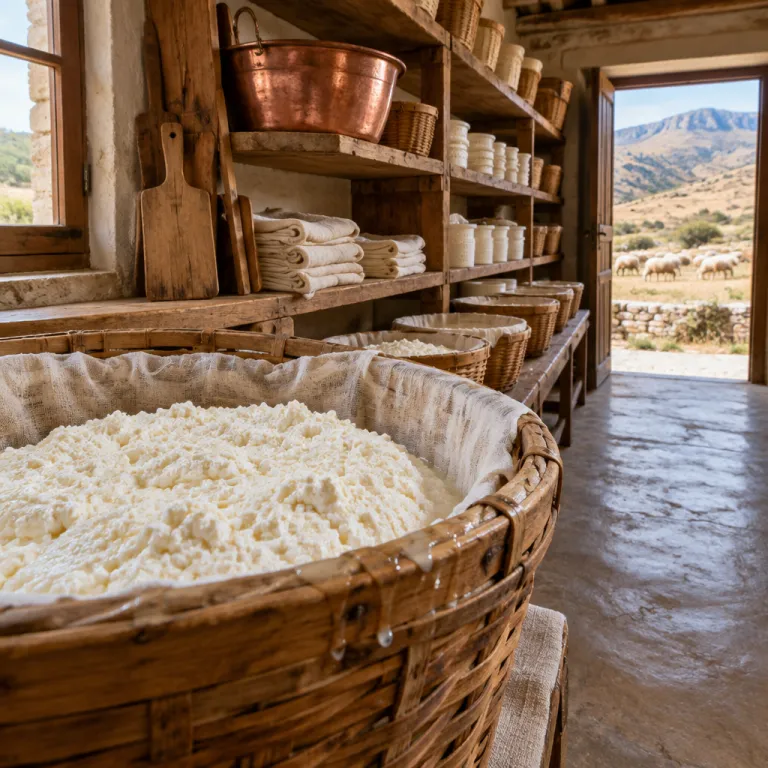
Corsican cheese brocciu farm visit tasting for luxury travelers
If charcuterie is the island’s muscle, cheese is its soul. On Corsica, an in-depth brocciu farm visit with guided tasting can sit alongside a five star hotel suite as the highlight of a trip, especially for travelers who plan their days around what they will taste next. This rugged island in France offers a level of cheese culture that feels inseparable from its mountains, its maquis and its fiercely local way of life.
Brocciu, the emblematic Corsican cheese, is made from the whey of sheep milk or goat milk, enriched with fresh ewe milk and heated slowly in wide cauldrons. Officially protected with PDO status as Brocciu corse or Brocciu corsu, this brocciu cheese is produced from November to June, which means your Corsican brocciu farm visit and tasting needs to be timed carefully if you want to experience it at its freshest.[1] Local shepherds work with both sheep and goat herds, moving them across the island Corsica landscape in a transhumance rhythm that still shapes what appears on your plate in the most refined gourmet dining rooms.
For travelers booking a luxury hotel in Corsica France, the smartest itineraries now weave in time on a family farm alongside time at the beach club. A well curated brocciu farm visit with cheese tasting can be arranged from properties near Porto Vecchio, from discreet retreats in the Niolo valley or from coastal addresses on Cap Corse, each pairing rural immersion with polished service. The result is a style of travel where you taste cheese Corsican producers made that morning, then return to a chilled glass of wine on your terrace while the sun drops behind the mountains.
Inside a brocciu farm: from sheep milk to warm curds
The most rewarding Corsican cheese experience usually begins before breakfast, when the light is still soft over the maquis. You arrive at a family farm in the Niolo valley, perhaps near Casamaccioli or Albertacce, where Corsican shepherds are already guiding sheep and goat herds toward the milking room. The air smells of wet earth, milk and the wild herbs that define this island terroir.
On a typical farm, local farmers heat the whey from sheep milk or goat milk in large metal cauldrons, then add fresh ewe milk to coax out the curds. According to official figures from INAO and the Brocciu PDO specifications, annual brocciu production reaches around 358 tons, supported by roughly 294 milk producers and 133 farmhouse producers, a scale that still feels intimate when you are standing beside a steaming vat of milk cheese.[1][2] (INAO, Brocciu corse / Brocciu corsu PDO dossier, 2022) The methods are simple, almost austere, yet every brocciu farm visit reveals how much precision hides in the timing of each stir and the exact temperature of the whey.
Once the curds rise, they are ladled into wicker baskets or perforated molds, forming the fresh brocciu cheese that defines so many Corsican recipes. During a well organized Corsican brocciu tasting on the farm, you might spoon the cheese Corsican makers have just lifted from the whey, still warm, onto a plate with a drizzle of local olive oil and a thread of Corsican honey. As one producer from the U Taravu cooperative explains, “The cheese should taste like the pasture that morning.”[2] (U Taravu cooperative, producer interview, 2021) The texture is cloudlike, the taste both lactic and herbal, and it explains why travelers cross the island for this moment rather than settling for an anonymous cheese plate in a generic hotel bar.
From brocciu to tomme corse: understanding Corsican cheese and terroir
Brocciu may be the headline act, but a serious Corsican cheese tasting will also introduce you to tomme corse and other aged styles. These firmer cheeses, often made from sheep cheese or goat cheese, mature in cool cellars where the island’s humidity and altitude shape their character. On a tasting board, you move from the gentle sweetness of fresh brocciu cheese to the deeper, nutty intensity of an aged milk cheese whose rind smells faintly of the maquis.
The maquis, that dense scrub of cistus, myrtle and wild herbs, is not just scenery for your wine tour photos. It is the pantry that feeds the sheep and goat herds, and it perfumes the cheese sheep milk long before any cheesemaker touches it. When you taste a slice of tomme from Cap Corse beside one from the high pastures above Porto Vecchio, you can sense how altitude, pasture and even wind direction leave their mark on every cheese Corsican producers age in their stone cellars.
Seasonality matters as much as geography, which is why brocciu vanishes from the markets in high summer. Transhumance, the seasonal movement of sheep and goat flocks between lowland and mountain pastures, dictates when there is enough rich ewe milk to make brocciu and when production shifts toward harder cheeses. A thoughtful farm-to-table tasting will explain this cycle clearly, helping you understand why the same family farm might serve warm brocciu in spring, then offer only aged Corsican cheese and robust Corsican charcuterie when you return later in the year.
From farm table to hotel plate: where to taste cheese in style
Once you have stood in the steam of a brocciu cauldron, you start to judge restaurant menus differently. On Corsica, the most interesting hotel dining rooms now build their menus around seasonal Corsican cheese rather than importing anonymous options year round. A refined property near Porto Vecchio might serve a fiadone made with fresh brocciu cheese in spring, then pivot to a chestnut flour and aged sheep cheese tart when the summer heat arrives.
In the interior, small inns and luxury lodges often collaborate directly with nearby family farm producers, turning a brocciu farm visit into a full evening experience. You might begin with a guided wine tasting featuring a structured red from Patrimonio or a mineral white from Cap Corse, paired with slices of cheese Corsican makers have aged for different lengths of time. Plates of Corsican charcuterie, drizzles of local olive oil and tiny pots of Corsican honey complete the picture, creating a meal that feels both rustic and meticulously curated.
Along the coast of island Corsica, some high end restaurants now list the name of the farm beside each cheese, much as they do for oysters or rare wines in mainland France. You might see a tomme from a producer in the Niolo valley or a fresh brocciu from a cooperative near Sartène, both clearly identified on the menu. This transparency allows you to trace the line from the sheep milk you saw being collected in the morning to the gourmet plate arriving at your table that night. For travelers who care about provenance, it turns every Corsican brocciu tasting into a narrative that continues through each hotel breakfast buffet and every late night cheese course.
Planning your Corsican cheese brocciu farm visit tasting from your hotel
For a traveler using a luxury and premium hotel booking website focused on Corsica France, the key is to plan your Corsican cheese brocciu farm visit tasting with the same care as your room category. Aim to visit between November and June if brocciu is non negotiable, since that is when production is in full swing and fresh cheese is easiest to taste at the source. Outside that window, you will still find excellent aged Corsican cheese, but the warm curds straight from the whey will be absent.
When choosing a hotel, look for properties that highlight relationships with local farmers and that can arrange private visits to a family farm rather than generic group tours. A concierge who can secure a morning with Corsican shepherds in the Niolo valley or in the hills above Porto Vecchio will add more value than one who only books a standard wine tour. Ask specifically whether your Corsican cheese brocciu farm visit tasting will include time in the dairy room, a guided tasting of both sheep cheese and goat cheese, and pairings with regional wine and Corsican charcuterie.
Practical logistics: Brocciu season typically runs from early November to late June, with peak availability from February to May. From Porto Vecchio, allow about 1.5 to 2 hours by car to reach farms in the Niolo valley; from Bastia or Ajaccio, plan on 1 to 3 hours depending on mountain roads. Book your Corsican cheese brocciu farm visit tasting at least a week in advance in low season and several weeks ahead during school holidays, confirming language options and whether transport from your hotel is included.
Finally, think about what you want to bring home, because not every cheese travels well from island to mainland France or onward to the United States. Harder cheeses made from sheep milk or mixed ewe milk and goat milk usually handle the journey better than fresh brocciu, which is best enjoyed on the island itself. For US travelers, check current customs regulations before packing anything, and when in doubt, savor your Corsican cheese brocciu farm visit tasting fully on Corsica, then bring back memories, photos and perhaps a bottle of wine instead of a fragile wheel of cheese.
FAQ
What is brocciu and how is it made ?
Brocciu is a traditional Corsican cheese made from sheep or goat milk. It is produced by heating the whey left over from cheesemaking, adding fresh milk and then collecting the curds in baskets or molds. As one official description from the PDO dossier puts it, "Brocciu is a traditional Corsican cheese made from sheep or goat milk."[2]
When is the best time to plan a brocciu farm visit ?
Brocciu is produced seasonally from November to June, when sheep and goat herds provide richer milk. A Corsican cheese brocciu farm visit tasting is therefore most rewarding in late autumn, winter or spring. Outside this period, you can still visit farms but will mainly taste aged cheeses rather than fresh brocciu.
What can I expect during a farm visit in Corsica ?
A typical visit includes watching the early morning milking of sheep and goats, seeing the whey heated in cauldrons and observing curds being transferred into molds. Many farms then offer a tasting at a communal table, with fresh brocciu, aged Corsican cheese, Corsican charcuterie, olive oil, Corsican honey and sometimes local wine. Some visits are arranged directly through hotels, while others can be booked at regional markets or tourist offices.
How is brocciu used in Corsican cooking ?
Brocciu appears in both savory and sweet dishes across the island. It is a key ingredient in fiadone, a baked cheesecake style dessert, and in stufatu, omelettes and stuffed pasta such as cannelloni. Many restaurants also serve it simply with olive oil, herbs or honey as part of a cheese course.
Can I bring Corsican cheese back to the United States ?
Hard and semi hard cheeses made from pasteurized milk generally travel better and are more likely to meet customs rules than fresh brocciu. Travelers should check current US customs regulations before packing any cheese, as rules can change and may differ for raw milk products. When in doubt, enjoy fresh brocciu during your Corsican cheese brocciu farm visit tasting and bring home aged cheeses that are vacuum sealed and clearly labeled.
Sources
Institut National de l’Origine et de la Qualité (INAO) ; Produits Laitiers AOP ; Corsican regional tourism boards and agricultural cooperatives ; Brocciu corse / Brocciu corsu PDO specification sheets.