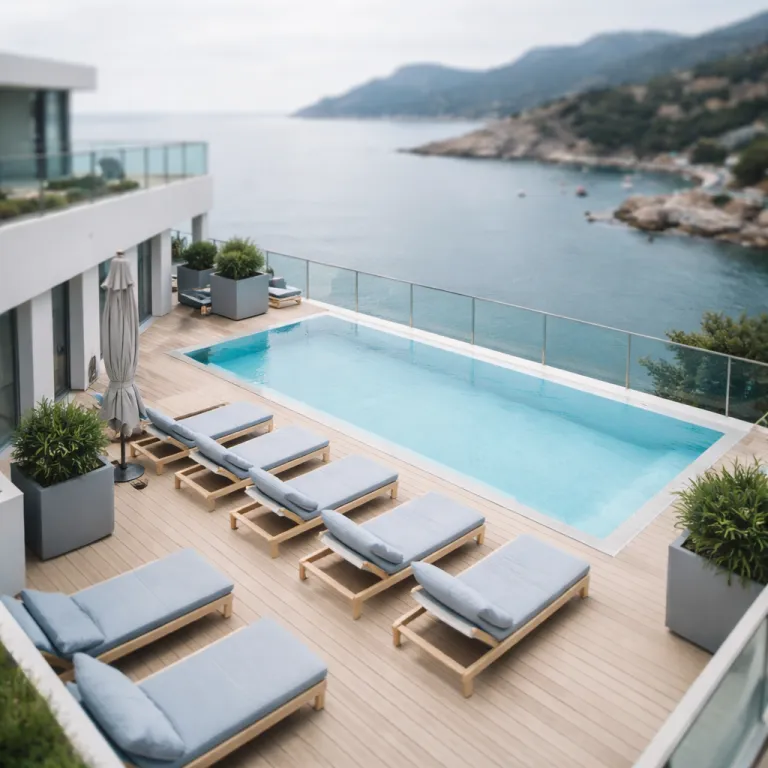
Why Corsica’s luxury hotels are under pressure this season
Corsica’s hotel leaders now frame the Corsica hotel industry crisis 2026 as structural rather than cyclical. With tourism representing roughly 41 % of regional GDP, according to consolidated estimates shared by GHR-Corsica during its Ajaccio industry briefing in February 2024, the island’s hospitality ecosystem is more exposed than many European destinations where travel is a smaller share of the economy. That vulnerability is amplified by an estimated 600,000 vacation rental beds versus about 180,000 hotel beds, a long term imbalance that leaves traditional properties squeezed on both price and service expectations.
Data shared by GHR-Corsica in Ajaccio in early 2024, in its annual observatory on Corsican hospitality performance, indicate projected hotel revenue in this French region falling by around 15 %, while operational costs run about 14.3 % above mainland France and have risen close to 20 % over recent seasons. Those higher costs reflect insularity premiums on air travel logistics, staffing, and supplies, at a time when global travellers are more cautious and average vacation budgets reported by the Ajaccio tourism office in its March 2024 seasonal note have slipped to about €1,530. The association notes that business closures among hospitality companies are up 36.3 %, with firms in difficulty rising 12.6 % and payment injunctions increasing 8.4 %, signalling that this island-wide hotel downturn is already reshaping Corsica’s accommodation map.
Several factors converge behind this reckoning for Corsican destinations that once relied on automatic summer demand. Unregulated rentals undercut hotels on nightly rates while facing fewer obligations on safety, accessibility, and employment, which intensifies pressure on full service properties that maintain year round teams. At the same time, a 14 % decline in visitors recorded by the Ajaccio tourism office in the first quarter of 2024 and softer international travel from markets such as the United States and other long haul origins mean that even emblematic addresses along the Route des Sanguinaires near Hôtel Dolce Vita feel the chill of the current Corsican hotel sector crisis. Local hoteliers report that suites which would typically sell out by Easter were still available in late May, a visible sign of how demand patterns have shifted.
From global shocks to local stress: how air travel and geopolitics filter into Corsican rates
What makes the ongoing Corsica hotel industry crisis 2026 unusual is how global turbulence filters down to a single Mediterranean destination. Conflicts in the Middle East and around the Red Sea, war on Europe’s eastern flank, and tensions in the Gulf have reshaped air travel patterns, flight times, and traveller psychology far beyond the directly impacted regions. When international routes face flight suspensions or longer detours, the resulting increase in aviation costs eventually reaches Corsica through higher fares and reduced capacity on key summer flights.
Tour operators that once pushed long haul travel to Asia, the Middle East, or Southeast Asia now rebalance their brochures toward closer European destinations, including Corsica and other Mediterranean islands such as Greece or Croatia. This shift might sound positive, yet it also intensifies competition between regional destination brands while travellers with tighter budgets negotiate harder on room categories and extras. In February, several large tour operators reported that demand for premium packages from the United States and other international markets was holding, but clients were shortening stays, a short term adjustment that erodes hotel profitability even when occupancy looks healthy on paper.
Air travel dynamics add another layer of complexity for Corsican hoteliers already wrestling with this island hospitality crunch. Longer flight times on some European and international routes, combined with higher air and fuel costs, push some travellers toward mainland France or urban breaks instead of island stays. Against this backdrop, new regional connections such as the routes highlighted in Air Corsica’s Brussels and Rome launch at €38 one way, announced in spring 2024 on the airline’s own information channels, show how targeted air and flight strategies can partially offset geopolitical headwinds for the island’s luxury segment. One five star property near Porto-Vecchio, for example, reports that early adopters of these new routes have shifted from three to four night stays, using the saved travel time to justify an extra night in a sea view suite.
What this means for luxury guests: smarter bookings, better value, deeper impact
For high end travellers, the Corsica hotel industry crisis 2026 translates into both risk and opportunity. On the risk side, a 36.3 % rise in business closures and a 12.6 % increase in companies in difficulty mean that some long loved addresses may quietly exit the market, so booking early and confirming reservations directly with the property is now essential. As GHR-Corsica’s own guidance underlines, “Many remain open; check directly with establishments.”
Yet this same pressure creates rare value moments at five star and leading four star hotels across the island’s coastal destinations. With July bookings lagging previous seasons and demand more volatile, revenue managers in Ajaccio, Porto-Vecchio, and Cap Corse are more open to negotiated rates, added value upgrades, and flexible conditions for discerning guests who commit early. A practical window is to open discussions 45 to 60 days before arrival for stays of five nights or more, when some properties will consider complimentary breakfasts, one category room upgrades, or late check-out in exchange for non-refundable deposits. Choosing a hotel over a private rental also supports local employment, from reception teams to restaurant brigades, reinforcing the wider tourism economy that GHR-Corsica and figures such as Catherine Quérard and César Filippi are fighting to stabilise.
Strategic travellers can go further by aligning their Corsican stay with a broader European itinerary that balances air travel constraints and regional flight times. Some guests now pair a Paris city break, using curated guides to elegant hotels in Le Marais or Saint-Germain, with a Corsican coastal retreat, optimising international flights while still investing in the island’s hospitality fabric. In a season shaped by conflict driven uncertainty and shifting global tourism flows, choosing regulated hotels, working with a trusted tour operator when needed, and staying updated on local news are the most effective ways to enjoy Corsica’s maquis scented luxury while contributing to the island’s long term resilience.
Practical tips for luxury travellers this season
- Start rate discussions 45–70 days before arrival for stays of five nights or more, especially in July and late August.
- Use direct channels (hotel website, email, or phone) to confirm opening dates, negotiate upgrades, and secure flexible conditions.
- For complex itineraries or multi-stop trips, combine direct booking with a trusted tour operator to manage flights and insurance.
- Check new regional air links to Corsica from hubs such as Paris, Brussels, or Rome to reduce connections and protect your schedule.
- Reconfirm flights and transfers 72 hours before departure, as airlines may adjust timings in response to geopolitical events.