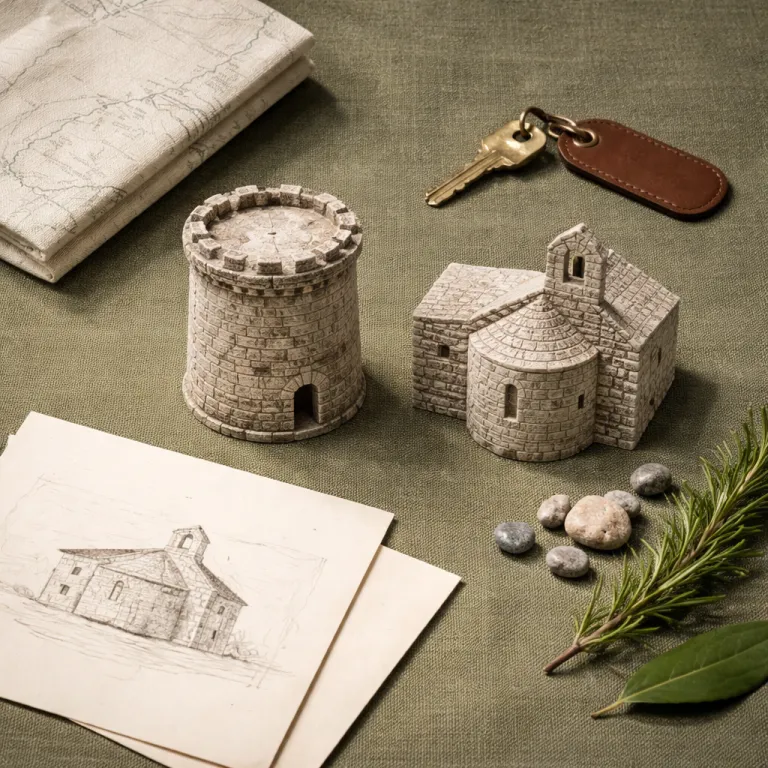
Why Genoese towers shape Corsica’s most characterful luxury stays
The coastline of Corsica is ringed with stone sentinels, the Genoese towers that still command the horizon above translucent bays. These coastal watchtowers were built by the Republic of Genoa between the 16th and early 17th centuries to shield the island from pirate attacks and to guide navigation along a shore that could be treacherous yet strategically vital. For today’s traveler, Corsican tower hotels and heritage retreats turn this defensive past into a refined way to sleep beside history.
From Cap Corse in the north to the wild west coast near Porto, around sixty Genoese towers remain, some restored as listed historic sites and others standing as romantic ruins above the surf. Recent surveys by local heritage bodies generally cite about 67 surviving coastal towers, including both intact structures and ruins.1 The original tower-building programs combined stone masonry, local artisans and a network logic: each Genoese tower communicated with the next by fire or smoke, creating a defensive chain that still structures how you explore Corsica by car or coastal hike. When you choose hotels near these towers in Corsica, you are not only booking a room but aligning your trip with the same cap and headland rhythm that once protected Corsican villages from pirate raids.
Families often ask why these austere structures matter for a luxury stay, and the answer lies in context and atmosphere. A pool terrace framed by a 16th-century tower on a granite spur feels different from a generic resort, especially when children can walk a few minutes up a marked path to touch the same stones that guarded Campomoro or Capu Rossu. In a market crowded with polished properties, Corsican Genoese tower hotels offer a sense of place that no amount of marble can replicate, particularly when staff can point out the tower from the breakfast table or lend binoculars for sunset tower-spotting along the coast.
Sleeping in the shadow of towers: from Cap Corse to the west coast
On Cap Corse, the slender finger of land pointing into the Tyrrhenian Sea, Genoese towers punctuate almost every cape and bay, and several refined guesthouses now sit within walking distance of these historic monument sites. Around the Tour de Sénèque (Tour de Sénèque in French, Torra di Seneca in Corsican), you find discreet stone lodges where a pre-breakfast hike of about 45 minutes to the tower becomes part of the daily ritual. Many of these stays work closely with local communities, echoing how Corsican families once acted as custodians for both towers and chapels along this coast, and reception teams can usually provide up-to-date advice on path conditions and parking.
Further south on the west coast, near Porto and the dramatic cliffs of Capu Rossu, Corsican tower hotels lean into the landscape with low-rise architecture and panoramic pools. Here, a family can plan a round-trip hike of 6–7 kilometers to the Capu Rossu tower, gaining roughly 400 meters in elevation, then return to a spa suite where children nap while parents sample Vermentino on a shaded terrace. When planning how to fly to Corsica in style and book the perfect luxury stay, aligning flight times with these coastal regions lets you land in Ajaccio or Bastia and reach Cap Corse, Porto or Campomoro in a single, well-paced day, even in peak summer when roads are busier.
In the Gulf of Valinco, near the Campomoro tower that dominates one of the island’s most sheltered bays, small luxury hotels and villas sit just behind the dunes. The Campomoro tower itself is accessible by a gentle coastal path of around 3 kilometers round trip, suitable for older children, and interpretive panels explain how the Republic of Genoa organized its defense against pirate attacks along towers Corsica-wide. In high season the tower is usually open on set days with a modest entry fee, and tickets are often purchased on site. Choosing a property here means that a simple afternoon walk becomes a living history tour, with the Genoese tower glowing gold above the sea as the sun drops behind the cape.
Romanesque chapels and inland heritage circuits for cultured families
While the coast is defined by towers, the interior of Corse hides another layer of heritage in its Romanesque chapels, many of them frescoed and quietly standing among chestnut groves. Regions such as Castagniccia, Nebbio and parts of Balagne hold small churches that were built between the 9th and 12th centuries, often on ridges that once linked coastal towers to inland communities. For families staying in Corsican tower hotels on the coast, a day trip inland to these chapels adds depth and variety to a beach-focused itinerary and offers cooler air on hot summer afternoons.
Near Saint-Florent in Haute-Corse, the Romanesque church of Santa Maria Assunta in the Nebbio plain anchors a circuit that can be combined with Cap Corse and its coastal Genoese towers in a single round trip. From certain refined agriturismo-style properties, you can drive from a sea-facing tower near Patrimonio up to Santa Maria in under an hour, then continue toward the chapels of Castagniccia before looping back to the coast. Around Porto-Vecchio and Sainte-Lucie de Porto-Vecchio on the opposite side of the island, several luxury family hotels use concierge teams to arrange private guides who connect chapel visits with coastal hikes and quiet coves, and can advise on chapel opening hours, dress codes and donation boxes.
Travelers who like to alternate urban refinement with heritage circuits sometimes pair a stay in Porto-Vecchio with a short city break in Paris, using neighborhood-focused guides on where to stay in style in the Marais for a refined city escape. Back on the island, inland guesthouses near Sainte-Lucie or in the hills above Porto-Vecchio offer cooler nights and easy access to both chapels and the coast. When you book through a curated platform or specialist agency, you can filter for properties that explicitly reference proximity to a Genoese tower, a Romanesque chapel or a listed historic site, ensuring that culture is built into every stage of your trip.
How to choose authentic Corsica Genoese towers heritage hotels
Not every property that uses a tower in its logo or name truly engages with Corsica’s heritage, so a little due diligence pays off. Authentic Corsica Genoese towers heritage hotels usually sit within a few hundred meters of an actual Genoese tower or a Romanesque chapel, and they often support restoration programs for at least one historic monument nearby. When reading descriptions, look for clear references to specific sites such as Capu di Muru (often written Capo Muro), Campomoro, Cap Corse, Santa Maria or the Campomoro tower, rather than vague mentions of “old stones” or “historic ambiance”.
Serious properties will explain whether the tower built into their grounds is a genuine Genoese tower or a later folly, and they will often mention if it is part of a listed historic ensemble. Many will also describe how their architecture respects the original tower-building techniques, using local stone and low volumes that echo the defensive silhouettes along the coast. A good sign is when the hotel suggests precise hikes, such as a two-hour hike to a tower above the west coast near Porto or a shorter accessible path to a tower on Cap Corse, with distances in kilometers and elevation in meters clearly stated, plus seasonal notes on shade, heat and recommended footwear.
One useful benchmark comes from how cultural eco-tourism is framed on the island: “Restoration programs funded by local authorities aim to save and maintain these historical monuments.” Properties that align with this spirit often partner with local communities, sponsor interpretive signage at nearby towers Corsica-wide, or host small exhibitions on the history of pirate attacks and coastal defense. Some also mention participation in regional initiatives that inventory and stabilize Genoese towers, or quote local heritage associations in their brochures. When a concierge can explain the difference between a tower on Capu Rossu and one on Capu di Muru, or suggest a round trip combining a chapel in Castagniccia with a sunset at a Genoese tower on the coast, you know you are in expert hands.
Designing a family itinerary around towers, chapels and the sea
For a premium family, the art lies in balancing heritage with downtime, and Corsica lends itself beautifully to a rhythm that alternates towers, chapels and beaches. One elegant structure is to base yourselves in two or three Corsica Genoese towers heritage hotels, perhaps starting in Haute-Corse near Cap Corse, moving to the west coast around Porto, then finishing near Porto-Vecchio or Sainte-Lucie on the south-east coast. Each base offers a different mix of accessible hikes, coastal tours and inland drives, with distances short enough to keep children engaged and transfer times usually under two hours between hubs.
From a Cap Corse hotel, you might plan a morning hike to a Genoese tower above the sea, followed by a lazy afternoon on a pebble cove and an early evening tour of a Romanesque chapel in Nebbio. Around Porto, a boat tour along the west coast to view towers Corsica-wide from the water can be paired with a gentle hike up to a tower near Capu Rossu, gaining a few hundred meters but rewarded by sweeping views. In the south, a stay near Porto-Vecchio or Sainte-Lucie allows for a mix of sandy beaches, a day trip to a chapel circuit inland and an evening stroll to a nearby tower built on a low cape, perfect for younger children and pushchairs on wider tracks.
Travelers who enjoy contrasting coastal heritage with urban culture sometimes add a short Paris segment, using guides on where to stay in style in the Marais before or after they explore Corsica. Whether you focus on Capu di Muru, Campomoro, Santa Maria or the towers near Tour de Sénèque, the key is to keep transfers under two hours and hikes under eight kilometers for younger families. With this structure, the island’s Genoese towers, inland chapels and crystalline bays become a coherent story rather than a checklist, and every overnight stay feels anchored in the long arc of Corsican history, from medieval chapels to 16th-century coastal defenses.
FAQ
What are Genoese towers and why were they built in Corsica ?
Genoese towers are coastal defense structures constructed by the Republic of Genoa around Corsica to protect against pirate attacks and to guide navigation. They were built mainly between the 16th and 17th centuries using stone masonry and local materials, often on prominent capes such as Cap Corse, Capu Rossu or Capu di Muru. Today, approximately 67 towers remain along the island’s coast, some restored as listed historic monuments and others standing as evocative ruins, according to regional heritage inventories.1
Can visitors access Genoese towers and Romanesque chapels with children ?
Many towers and chapels are accessible by short, well-marked paths that suit families, especially around Campomoro, Cap Corse and the Porto area. Some towers, such as the Campomoro tower or certain sites near Sainte-Lucie and Porto-Vecchio, offer gentle hikes with limited elevation gain measured in a few hundred meters. Romanesque chapels in Castagniccia and Nebbio are usually reached by road with brief walks, making them easy to include in a family round trip, and local tourist offices can provide maps and current access information.
How can I tell if a hotel is genuinely linked to Corsica’s heritage ?
A genuine Corsica Genoese towers heritage hotel will clearly reference nearby sites such as a specific Genoese tower, a Romanesque chapel or a listed historic monument, often within walking distance. These properties may support restoration projects, provide detailed information on local history and suggest precise hikes or tours to towers and chapels. If a hotel only uses generic historic language without naming places like Cap Corse, Santa Maria, Campomoro or Capu Rossu, it is likely trading on atmosphere rather than real heritage, so do not hesitate to ask direct questions before booking.
What regions are best for combining beaches with heritage visits ?
Cap Corse and Haute-Corse offer a strong mix of coastal towers, small beaches and inland chapels around Nebbio, all within manageable driving distances. The west coast near Porto and Capu Rossu combines dramatic cliffs, boat tours and hikes to towers, while the south around Porto-Vecchio and Sainte-Lucie pairs sandy coves with easy day trips inland. Choosing two or three bases along this arc lets you explore Corsica in depth without long transfers, and many family-friendly hotels open from spring to late autumn.
Are guided tours recommended for exploring towers and chapels ?
Guided tours can add valuable context, especially for Romanesque chapels whose frescoes and symbolism are not always explained on site. Many luxury hotels work with local guides who know the history of pirate attacks, the construction methods of each tower built and the role of local communities in maintaining these sites. For families, a private guide can tailor the pace, combine a coastal hike with a chapel visit and keep children engaged with stories that bring Corsican history to life, and hotel concierges or local tourist offices can usually help with bookings.
1 Figures for surviving Genoese towers in Corsica are drawn from regional heritage inventories and local conservation reports, which generally cite around 67 coastal towers, including both intact structures and ruins.